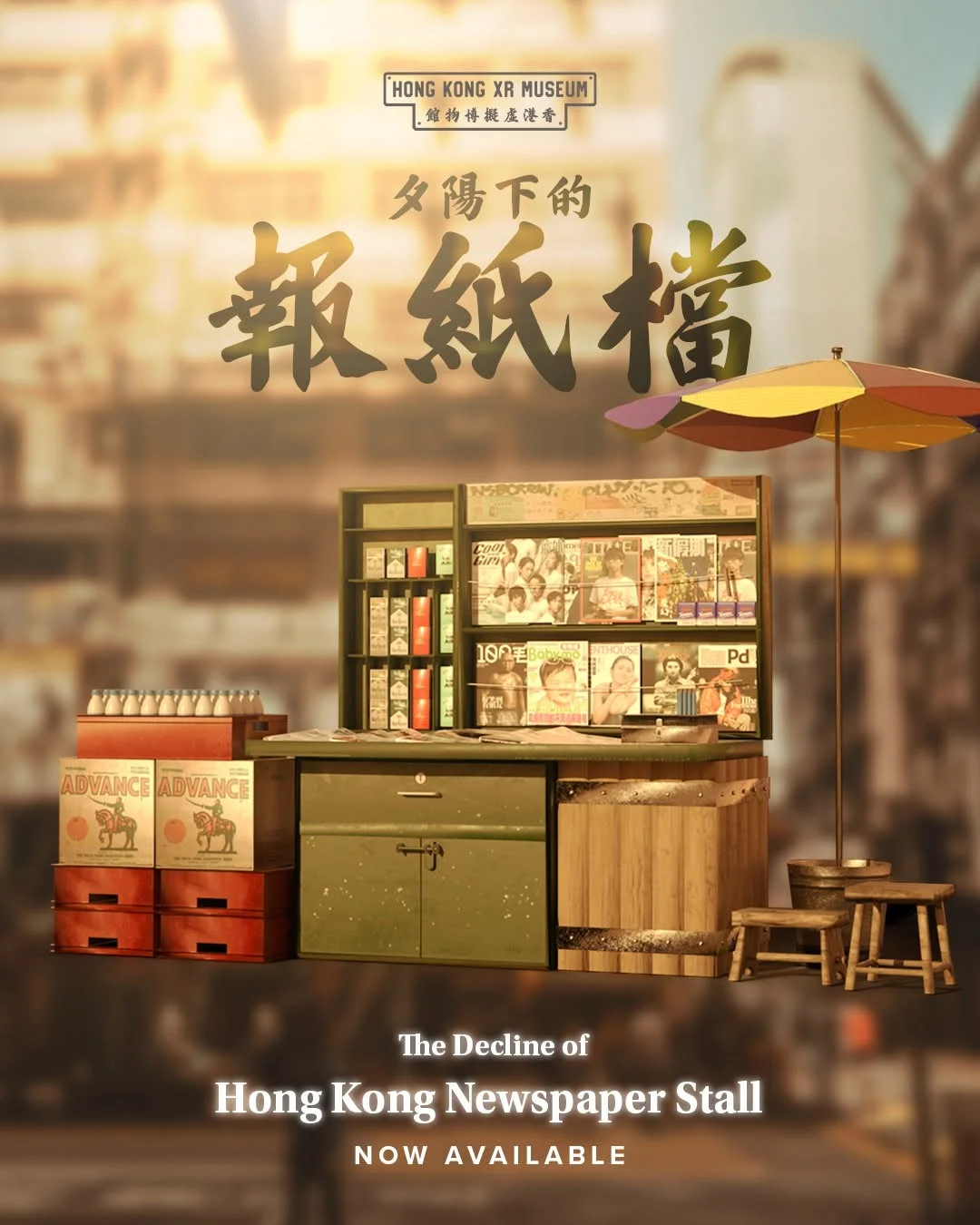
The Decline of Hong Kong Newspaper Stall
How does the decline of the newspaper stall reflect the change and fragility of freedom of press worldwide — and exactly what are the boundaries of press freedom, if any?
- Era
- 1904 onward
- Theme
- Street trades · press freedom
- District
- Central
How does the decline of the newspaper stall reflect the change and fragility of freedom of press worldwide — and exactly what are the boundaries of press freedom, if any?
It is no surprise that the decline of the print media and the apprehensive enactment of the National Security Law have led to the falling number of newspaper stalls in Hong Kong. How does it reflect the change and fragility of freedom of press worldwide, and exactly what are the boundaries of press freedom, if any? Through this AR experience, we will take a deep dive into the rise and fall of this dying industry over the past 100 years.
In 1903, Tse Tsan-tai, an Australian Chinese revolutionary and descendant of a general who led the Taiping Rebellion, founded the first English newspaper, the South China Morning Post. The following year, he opened the first newspaper stall in Garden Road, Central, with the goal of expanding readership and enabling information flow to support the anti-Qing revolution.
In the following decades, freedom of press blossomed during the struggle between China and Britain, especially when the Communist Party took power in 1949 after WW2. Hong Kong became an oasis of press freedom in Asia under the colonial British government. Many refugees and their descendants who fled the CCP joined the newspaper industry in the 1980s and 1990s, making this period a golden age for newspaper stalls. According to statistics, there were 2,500 newspaper stalls at the time, 18 Chinese newspapers and 2 English newspapers. The busiest newspaper stall sold thousands every day.
In 1995, Jimmy Lai founded Apple Daily, a pro-democracy newspaper. He sold newspapers at a cut-throat price of $2 and shook the industry with his innovative layout of full-colour printing, causing many other newspapers to close down. The reporting methods and paparazzi culture he started caused a love–hate relationship between Hong Kongers and Apple Daily. On one hand, freedom of press in Hong Kong was manifested by its existence; on the other hand, it was regarded as sensational and biased, trampling the industry like no one before.
So exactly, what is freedom of press? What are the things we can say and report, and what can't we? According to the Universal Declaration of Human Rights issued by the United Nations in 1948, "Everyone has the right to freedom of opinion and expression; this right includes freedom to hold opinions without interference…" by the government. When reporting news or disseminating opinions, it has the effect of revealing the truth and monitoring the government to prevent it from becoming too powerful. Simply put, in the free world it is okay to criticize the government, but it's not okay to libel and create fake news.
Although the very existence of press freedom is to protect the right to information, the rise of social media and fake news in recent years has blurred the line between facts and opinions, making people lose confidence in the media and cast doubt on the meaning of freedom of press. According to Freedom House's 2017 report, only 13% of the world's population has freedom of press. Another report by Reporters Without Borders in 2019 stated it was closer to 9%. These figures show the fragility and preciousness of press freedom.
What do you think we can do to safeguard press freedom? Curator Cat hopes that everyone can lead by example: share more fact-based news channels, such as the BBC and Hong Kong Free Press, constantly fact-check any questionable news, and cultivate critical thinking in order to combat disinformation.
Capture & build
3D modelling: 我要做Model · 完宇宙空間設計
© HKXRM
Sources
Keep the museum open
Every exhibit takes weeks to months to make, and the team runs on volunteers. Your donation pays for the modelling, the interviews and the hosting behind the next reconstruction — and supporters get first access to the big ones.