- Era
- 1972
- Theme
- Civic life
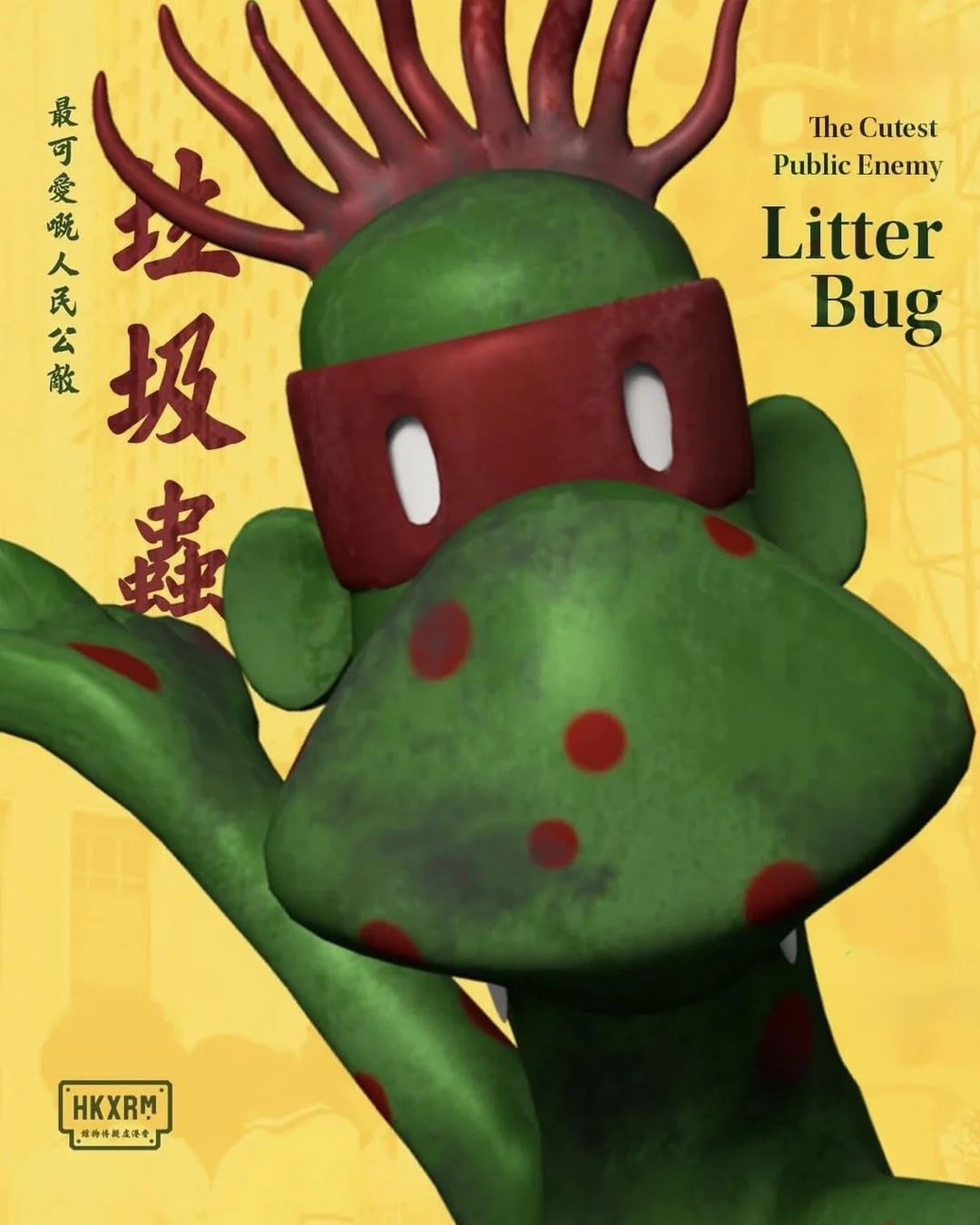
The Lovable Public Enemy
After the social unrest of the late 1960s, the British colonial government began to take Hongkongers’ everyday concerns more seriously. Government departments started paying more attention to what residents needed, and the Information Services Department launched a series of publicity campaigns to bring the government closer to the public.
In December 1967, Arthur Hacker arrived in Hong Kong from Britain to take up the post of art director at the Information Services Department. He worked on a number of government campaigns, but his most memorable creation was a villain and public enemy named Lap Sap Chung, the Litterbug. With the rise of colour television, the green monster Hongkongers loved to hate jumped from street posters into living rooms across the city. For a while, he was everywhere. His popularity helped make the Clean Hong Kong campaign a success, encouraging people to take pride in their city by keeping it clean.
The colonial government also gave residents more ways to lodge complaints and paid closer attention to public opinion when making policy. Over time, public support for the government rose sharply.
In the 1970s, the colonial government chose to govern Hong Kong with a smile. It understood that short-lived events like “Night Vibes” or a few dollars in spending vouchers could do little to heal a divided society. That took genuine empathy, a willingness to listen, and policies that made people’s lives better.
Few Hongkongers today expect the current government to learn from that chapter of history, change its approach, and mend those divisions. But wherever we find ourselves, I hope we’ll remember what was good about that time and keep Hong Kong’s spirit and values alive by passing them on.
Capture & build
HKXRM
© HKXRM · 2023-10-26
Keep the museum open
Every exhibit takes weeks to months to make, and the team runs on volunteers. Your donation pays for the modelling, the interviews and the hosting behind the next reconstruction — and supporters get first access to the big ones.