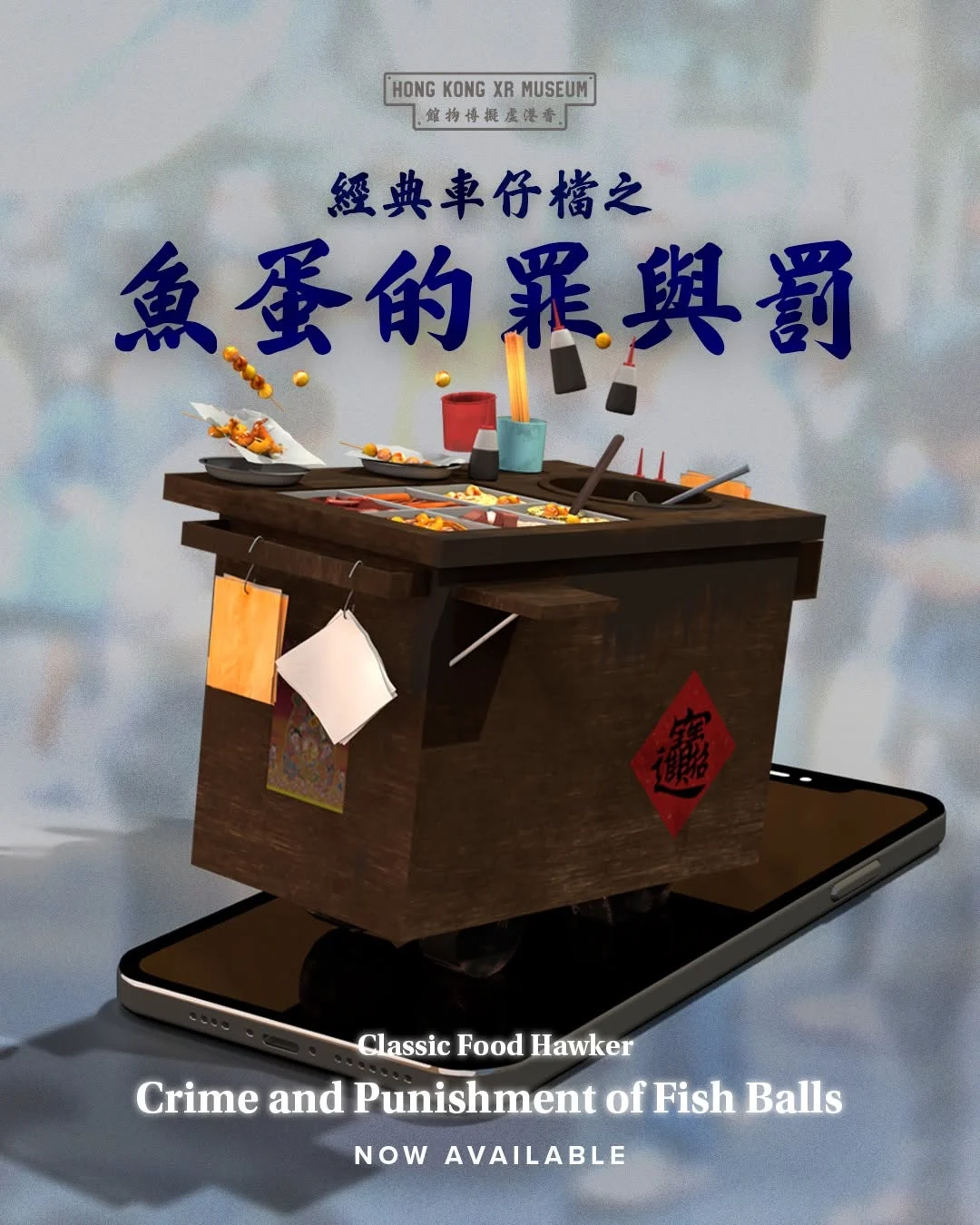
Crime and Punishment of Fish Balls
Hong Kong has been an important international hub where the east and west met and mingled since the 1900s. Its world-renowned street food, curry fish ball, was the perfect example of this beautiful encounter.
- Era
- 1950s onward
- Theme
- Street food · hawkers
Hong Kong has been an important international hub where the east and west met and mingled since the 1900s. Its world-renowned street food, curry fish ball, was the perfect example of this beautiful encounter.
Hong Kong has been an important international hub where the east and west met and mingled since the 1900s. Its world-renowned street food, curry fish ball, was the perfect example of this beautiful encounter. In this AR exhibit, Curator Cat will travel back in time with you to explore the story and struggles grass root Hong Kongers had behind this scrumptious snack.
Curry Fish Ball was first invented in the 1950s in Hong Kong. Curry was brought by Indians who traveled along with the British as they visited Hong Kong as a British colony at the time; fish balls, on the other hand, were a Chiu Chow snack from China. The ingenious Hong Kongers combined the best of both worlds and invented this spicy and exciting snack that was once named among the top 10 street foods of the world.
The street hawkers prepared and sold these curry fish balls in food carts and it became very popular right away. This kind of food cart created tremendous job opportunities for the large influx of new immigrants from China, where political and economic environments were unstable at the time. The amount of hawker carts on the streets was an indicator of Hong Kong's economy and the life saver of grass root Hong Kongers in troubled times.
However, things started to change in the 1970s when the British HK government called out the health and sanitary problems these hawker carts potentially caused, and owners of shops and landlords started to complain about unfair competition as these hawkers didn't pay rent to do their businesses. With all of these conflicts of interests, the British HK government tightened regulations on street food hawkers and stopped issuing new licenses to them.
There were always exceptions beyond the law though. Law enforcement officers were often lenient to these grass roots hawkers, especially during Lunar New Year when most shops were closed for the holiday. The officers developed a tacit understanding with the street hawkers so they could make a small fortune for LNY. However, the dynamics between government officials and street hawkers went south when Hong Kong's sovereignty was transferred to China in 1997.
In 2000, the HK government under China established the Hawker Control Team as an attempt to completely get rid of street hawkers from the street. Enforcement actions were taken more frequently and punishments on these street hawkers became more severe as well. The relationship between the government and grass root Hong Kongers has been tense ever since.
In 2002, although the HK government launched a voluntary exchange of licenses for street hawkers and tried to encourage them to return their licenses and assigned fixed vacant stores to continue their businesses, it didn't meet the actual needs of these street hawkers. Rent is so expensive in Hong Kong and fish balls were sold for only a few HK dollars with a low profit margin. Even if they ran the store for 24 hours selling fish balls, they still couldn't afford to pay for rent. This lack of ability to move upward created a solid ceiling that fueled the anger of Hong Kong people.
Over the past 20 years, the HK government has been ignoring the real demands of the grassroots and failed to properly address their true needs. The Fish Ball Revolution eventually broke out and led to even larger protests in the following years.
Through this AR exhibit, Curator Cat hopes to unveil the cause and effect of the imbalance of power between the HK people and the government, and to use this as a lesson to re-think the democracy movement in Hong Kong.
Capture & build
HKXRM
© HKXRM · 2022-05-10
Keep the museum open
Every exhibit takes weeks to months to make, and the team runs on volunteers. Your donation pays for the modelling, the interviews and the hosting behind the next reconstruction — and supporters get first access to the big ones.